 Brentwood Electrical Services
Guide
How Often Should an EICR Be Carried Out?
An EICR is usually needed every five years for rented homes and commercial premises, and about every ten years for a home you own. Here is how to check yours.
- Send a short enquiry
- Covering Essex
- EICR and related services
For most rented homes and commercial premises, an EICR (electrical installation condition report) should be carried out at least every five years. For a home you live in yourself, the usual recommendation is every ten years, or sooner if the property changes hands or shows signs of electrical problems. The inspector who carries out the test sets the recommended date for the next one on the report.
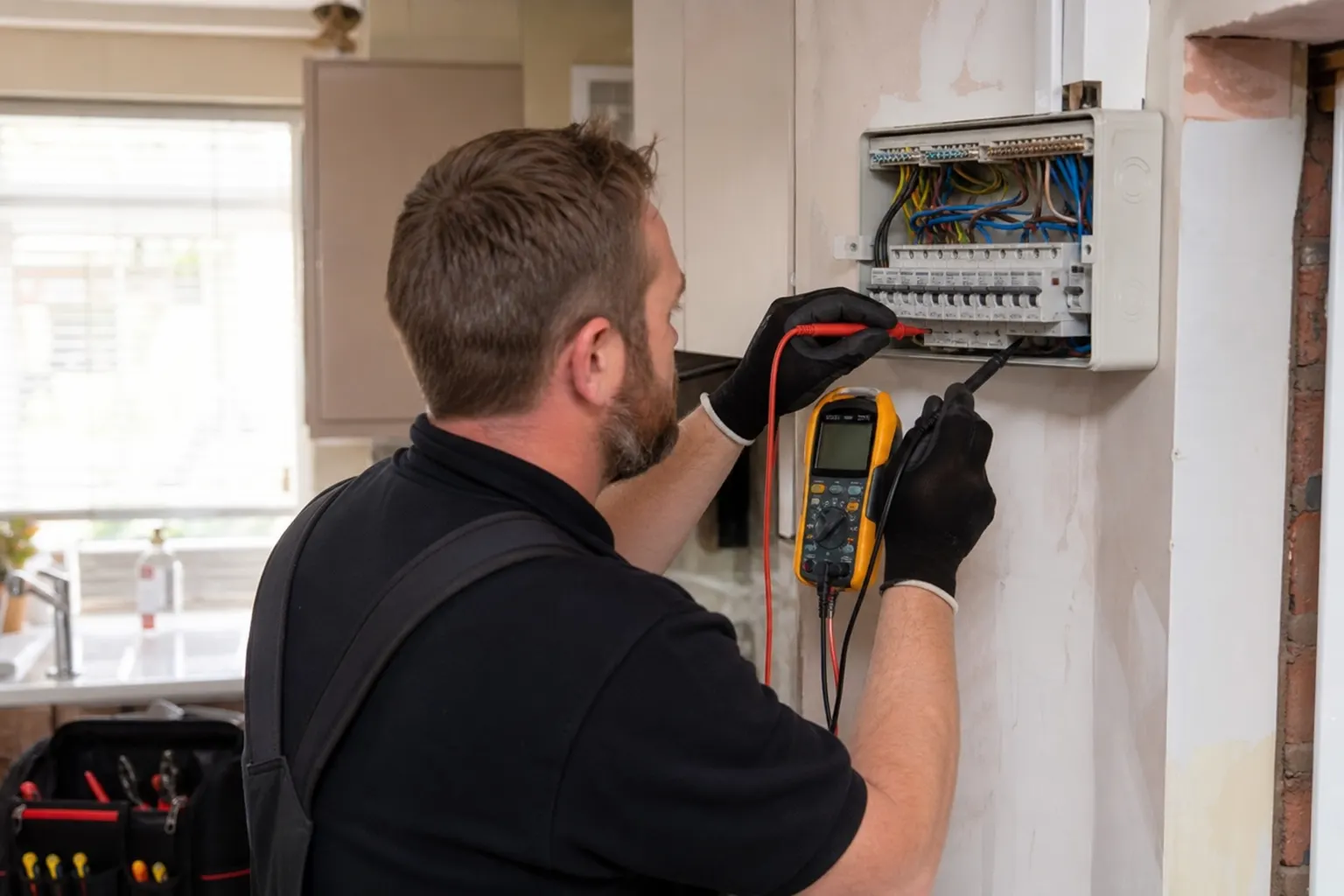
The usual intervals at a glance
An EICR records the electrical installation condition of a property: the wiring, the consumer unit, earthing and bonding, and the fixed parts of the system. Industry guidance sets typical gaps between inspections depending on how a building is used.
Owner-occupied homes: about every ten years. Rented homes: no more than five years. Commercial premises: commonly five years. Industrial sites: often shorter, around three years. Places with higher risk or heavy wear, such as swimming pools, may need much more frequent checks.
These are the maximum gaps, not targets. If the inspector finds the installation is ageing or has been altered a lot, they can recommend a shorter interval.
Landlords and rental properties
If you let a home in England, there is a legal requirement for the electrical installation to be inspected and tested at regular intervals, and the maximum gap is five years. Landlords must give tenants a copy of the condition report, and must carry out any remedial work the report calls for within the timescale it sets.
A new EICR is also sensible at the start of a new tenancy if the last report is close to expiry, or if major electrical work has been done since. Rules differ between England, Scotland and Wales and can change, so check GOV.UK for the current position for your property.
This is why the answer to "3 years or 5 years" is usually five for a standard rental. Three years tends to apply only where the inspector recommends a shorter gap or the building type calls for it.
Homeowners: ten years, or sooner
There is no general legal requirement for owner-occupiers to have an EICR, but regular testing is good electrical safety practice. Ten years is the usual guide for a settled, well-maintained home.
Consider testing sooner if:
1. You are buying or selling and want to know the condition of the wiring. 2. The property has an older consumer unit, or the wiring has not been looked at for a long time. 3. You have had extensions, rewiring or new circuits added. 4. You notice warning signs: flickering lights, warm sockets, tripping circuits, burning smells or scorch marks.
If something looks or smells wrong, do not wait for the ten-year mark.
Commercial premises and larger organisations
Shops, offices, workshops and other commercial premises are generally advised to have an inspection about every five years. Employers also have wider duties to keep electrical systems safe, so many businesses set their own schedule alongside the report.
Larger organisations, including healthcare and public bodies, often follow their own policies or sector guidance, which can call for more frequent testing. If you manage a building like that, check what your insurer, landlord or governing body requires. Premises with heavy use, damp, dust or older equipment can justify a shorter interval than the standard gap.
How long an EICR stays valid
A report does not expire on a fixed date set by the document itself. It is valid until the next inspection date written on it by the inspector, which reflects the property type and the condition they found.
A report can stop being useful sooner than that. If you add circuits, change the consumer unit or have significant alterations made, the earlier results no longer describe the whole installation. A change of occupancy is another good moment to check.
If a report comes back as unsatisfactory, it will list observations that need remedial work. Items that are dangerous or potentially dangerous need prompt attention. Once the work is done, ask for written confirmation so your records stay complete.
Planning your next test
Put the next due date in your diary when you receive the report, and keep every report together with any certificates for later electrical work. Landlords should keep copies they can hand to tenants or the local authority if asked.
Brentwood Electrical Services provides EICR testing and covers Brentwood and the wider Essex area. Whoever you choose, ask what the inspection will cover, whether any parts of the property are hard to access, and how remedial work would be quoted if it is needed. If you are worried about electrical work that someone else has done, you can report it to the relevant registration scheme, or to your local council if it is a rented property. GOV.UK has current guidance.
Common questions
How often does an EICR need to be done on a rental property?
At least every five years in England, or sooner if the inspector recommends a shorter gap. Rules can differ in other parts of the UK and can change, so check GOV.UK for the current position.
Is an EICR 3 years or 5 years?
Five years is the standard maximum for rented homes and most commercial premises. Three years is more typical for industrial settings, or where the inspector sets a shorter interval because of the installation's condition.
How long is an EICR valid for in the UK?
It is valid until the next inspection date stated on the report. That is often five years for rented and commercial property and around ten for an owner-occupied home, but major alterations or faults can make it out of date sooner.
How much does it cost to have your electrics checked?
It depends on the size of the property, the number of circuits, how easy the wiring and consumer unit are to reach, and how long the testing takes. Any remedial work is quoted separately. Ask for a written quote that explains what is included.
Useful sources
- NICEIC: The electrical contracting body, with a register to check an electrician.
- GOV.UK: electrical safety standards in the private rented sector: The official guidance for landlords, tenants and councils on electrical safety checks.